
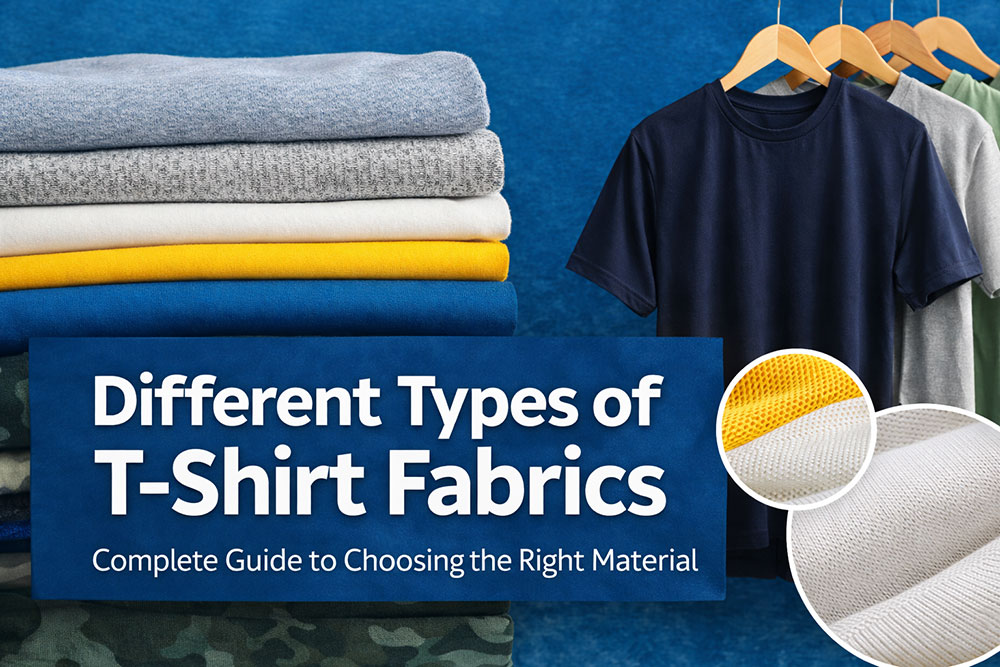
Different Types of T-Shirt Fabrics: Complete Guide to Choosing the Right Material
Choosing the right T-shirt fabric matters more than color or fit. It determines comfort, durability, breathability and how a design will print. Whether you’re ordering custom merch, sourcing for a sports line or picking everyday tees, understanding fabric types — their makeup, feel, care and printing compatibility — saves time and money.
This guide explains the common T-shirt fabrics you’ll see on supplier pages (cotton, polyester, blends, knits like jersey and interlock, technical mesh, jacquard, and specialty fibers such as bamboo and modal). For each fabric I’ll cover what it feels like, where it’s best used, ideal GSM ranges, printing tips (sublimation, DTG, screenprint), pros and cons, and quick buying and care advice.
How fabrics are described
Before we dive into types, know these terms that appear in product listings:
- GSM (grams per square meter): fabric weight — lower = lighter (120–160), higher = heavier (180–300).
- Knit vs Woven: Most T-shirts use knit (stretchy). Woven fabrics are for shirts/trousers.
- Combed / Ring-spun: Finishing processes that make cotton softer and stronger.
- Finish & Coating: Water repellents, anti-odor, or softeners may be added.
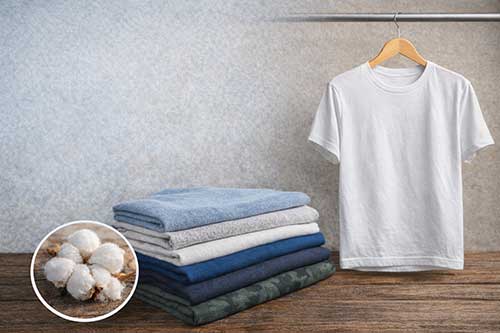
1. Cotton (100% cotton)
- What it is: Natural fiber from the cotton plant. Common variants: carded cotton, combed cotton, ring-spun cotton, organic cotton.
- Feel: Soft, breathable, matte finish.
- GSM range: 140–220 (daily tees 160–180).
- Best for: Casual everyday wear, eco lines, screen printing, DTG.
- Pros: Comfortable, breathable, hypoallergenic, easy to dye.
- Cons: Shrinks if not pre-shrunk, wrinkles, slower drying.
- Printing: Works well with screen print and DTG; not ideal for sublimation.
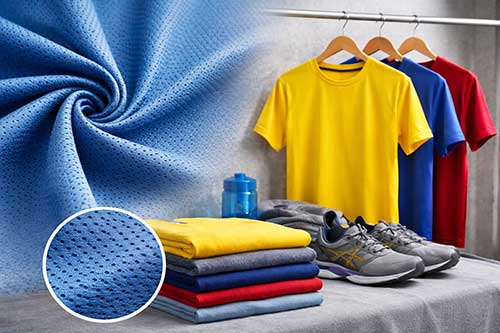
2. Polyester
- What it is: A synthetic fiber prized for durability and moisture management.
- Feel: Smooth, sometimes slightly shiny; less breathable than cotton unless engineered.
- GSM range: 120–220 (light sports 120–160).
- Best for: Sportswear, performance tees, sublimation prints.
- Pros: Fast drying, wrinkle resistant, durable, holds color extremely well.
- Cons: Can feel synthetic, traps odors unless treated.
- Printing: Excellent for sublimation and dye-sublimation transfer; can also be screen printed with proper inks.
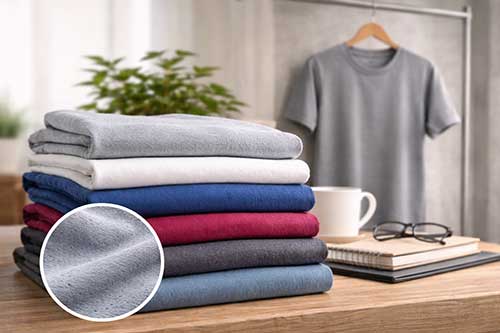
3. Cotton-Polyester Blends (Polycotton)
- What it is: Mix of cotton and polyester (often 50/50 or 60/40).
- Feel: Softer than polyester, more durable and wrinkle resistant than cotton.
- GSM range: 140–200.
- Best for: Corporate tees, budget merch, everyday wear.
- Pros: Balanced cost, lower shrinkage, retains shape.
- Cons: Can pill over time; print feel differs.
- Printing: Works well for screen print and DTG; sublimation not ideal unless polyester content is high.
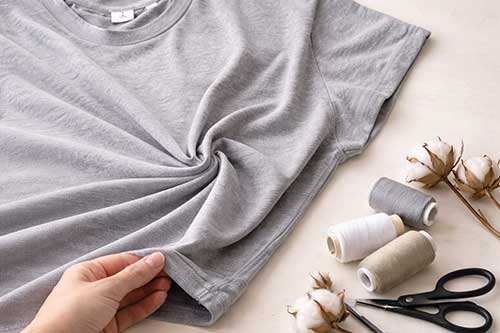
4. Tri-Blend (Cotton + Polyester + Rayon/Viscose)
- What it is: Usually cotton + polyester + rayon (or modal) — offers very soft hand and drape.
- Feel: Very soft, worn-in feel; drapes well.
- GSM range: 120–180 (light and flowy).
- Best for: Fashion tees, premium casual wear.
- Pros: Premium feel, great fit and drape, breathable.
- Cons: More expensive; may be less durable under heavy washing.
- Printing: Screen print works; DTG possible; avoid sublimation.
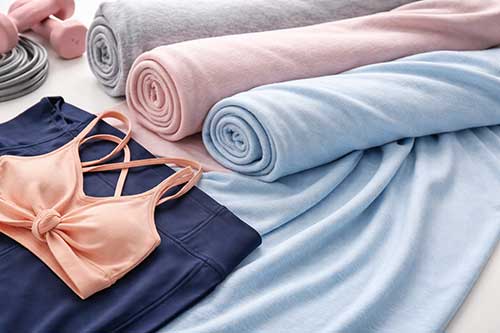
5. Lycra / Spandex / Elastane (often blended)
- What it is: Highly elastic fiber usually blended (e.g., 95/5 cotton/Lycra).
- Feel: Stretchy, form-fitting.
- GSM range: 160–200 depending on blend.
- Best for: Activewear, fitted tees, athleisure.
- Pros: Shape retention, comfort for movement.
- Cons: Can weaken over time with heat.
- Printing: Fine for most prints; avoid high heat during curing.
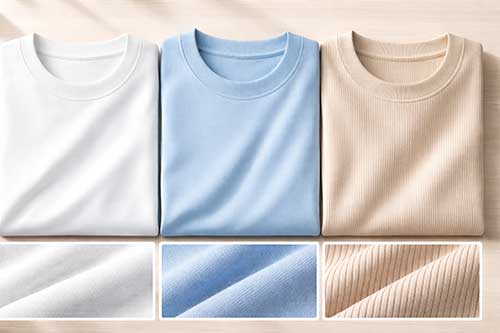
6. Jersey, Interlock & Rib Knit (fabric structures)
- Jersey: Single knit, lightweight, soft — classic tee.
- Interlock: Double knit, denser and smoother — less see-through, better structure.
- Rib knit: Elastic vertical ribs used for collars and cuffs or full tees for fitted look.
- Best for: Everyday tees, polos, fitted styles.
- Printing: Works with normal printing processes.
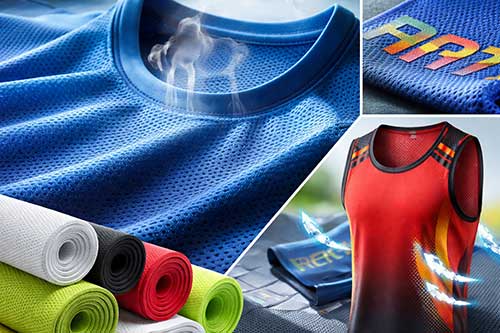
7. Mesh & Performance Knits (polyester meshes)
- What it is: Open knit for airflow (e.g., micro-mesh, lycra mesh).
- Best for: Sports jerseys, running shirts.
- Pros: Superior breathability, quick drying.
- Cons: Less suitable for heavy prints; prints may block airflow.
- Printing: Use sublimation for polyester mesh; screen print selectively.
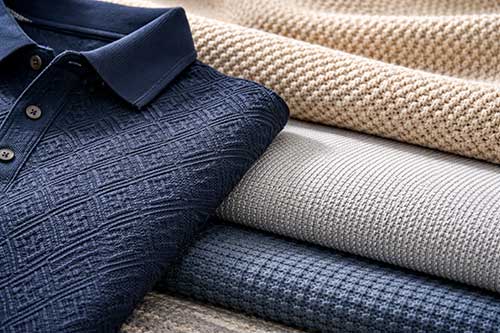
8. Jacquard, Piqué & Specialty Textured Knits
- Jacquard: Pattern woven into knit — premium look.
- Piqué: Textured knit often used in polos.
- Popcorn knit / Matty / Textured knits: Fashionable surfaces for style.
- Best for: Premium casuals, brand differentiation.
- Printing: Printing may be affected by texture — test before bulk production.
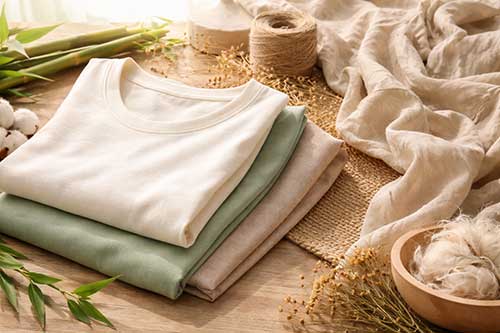
9. Natural & Sustainable Fibers (Bamboo, Modal, Linen)
- Bamboo/Modal/Viscose: Soft, silky, eco-friendly alternatives.
- Linen: Breathable, textured — more for summer casuals.
- Best for: Sustainable fashion lines, premium summer wear.
- Cons: Care requirements, can be pricier.
Fabric & Printing compatibility (quick cheat sheet)
- Sublimation: Polyester or high-poly blends only.
- DTG (direct-to-garment): Works best on 100% cotton or high-cotton blends.
- Screen print: Versatile — works on cotton, blends, polyester (use proper inks).
- Heat transfer: Works on many but adhesion varies with fabric finish.
How to choose the right fabric (short checklist)
- Purpose: Daily wear, workout, fashion, or print-focused?
- Print method: Sublimation → polyester; DTG → cotton.
- Feel & drape: Try swatches — ring-spun cotton vs tri-blend feels very different.
- GSM: Lighter (120–160) for summer; heavier (180–220+) for structure.
- Care & lifespan: Performance fabrics often last longer; natural fibers may need gentle care.
Quality indicators and supplier checks
- Ask for fabric composition and GSM on spec sheet.
- Request fabric swatches (hold, stretch, wash sample).
- Inspect stitching & seam quality in product photos.
- For sublimation, confirm 100% polyester or at least 90% polyester.
- Check pilling & shrinkage guarantees.
Care tips (simple, user-friendly)
- Wash inside out on gentle wash; avoid hot water for blends.
- Tumble dry low or hang dry to minimize shrinkage.
- Avoid high temperature ironing on polyester/synthetic fabrics.
- Use gentle detergents for modal/linen/bamboo.
Frequently Asked Questions About T-Shirt Fabrics
Which fabric is best for everyday comfort?
Ring-spun cotton with a GSM between 160 and 180 is considered one of the best fabrics for everyday T-shirts. It feels soft on the skin, allows airflow, and remains comfortable even in warm weather. Tri-blend fabrics are also popular for their premium softness.
What is the best fabric for sports or gym T-shirts?
Polyester and polyester-spandex blends are the best fabrics for sportswear. These materials wick moisture away from the body, dry quickly, and maintain their shape even during intense workouts.
Which fabric works best for custom T-shirt printing?
The best fabric depends on the printing method. Cotton is excellent for screen printing and DTG printing, while polyester is ideal for sublimation printing because the ink bonds directly with synthetic fibers.
What GSM is ideal for a good quality T-shirt?
A GSM between 160 and 180 is considered ideal for everyday T-shirts. Lightweight summer T-shirts may range from 120 to 150 GSM, while premium or thicker shirts often use fabrics between 180 and 220 GSM.
What is a tri-blend T-shirt fabric?
Tri-blend fabric is made from three fibers — cotton, polyester, and rayon or viscose. This combination creates a soft, lightweight, and breathable fabric with excellent drape and a slightly textured look.
Which T-shirt fabric shrinks the most?
100% cotton T-shirts tend to shrink the most, especially if they are not pre-shrunk or if they are washed in hot water. Polyester and blended fabrics usually shrink much less.
How can you identify high-quality T-shirt fabric?
High-quality T-shirt fabrics usually have tight knitting, smooth texture, even coloring, and strong stitching. Looking at close-up images of the fabric weave and seams can also help determine overall quality.







Leave a Reply