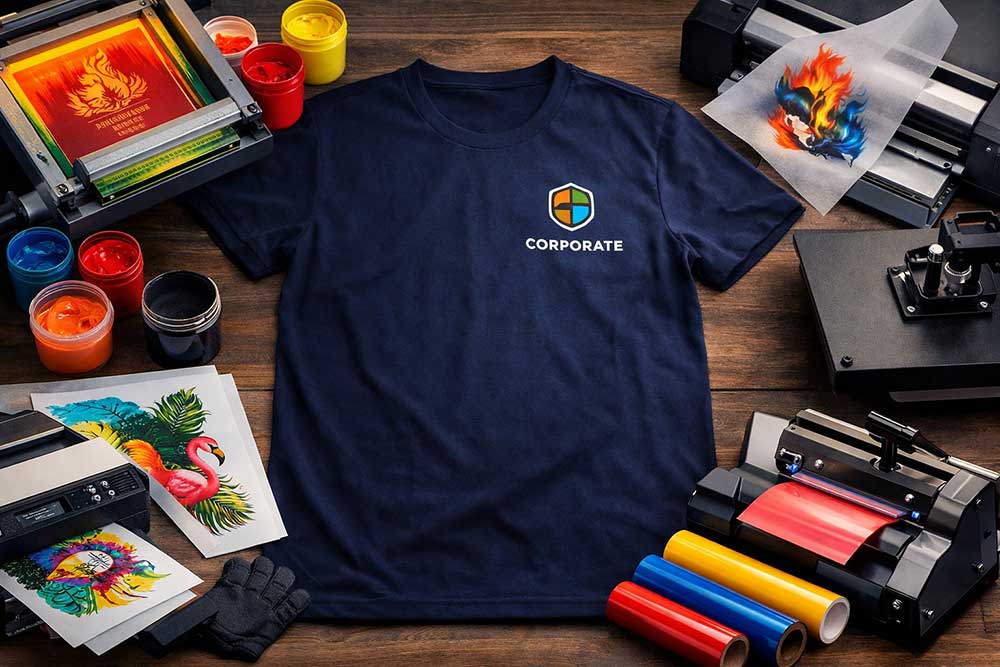
Complete Guide to T-Shirt Printing Methods: Which One Should You Choose?
If you’ve ever ordered custom T-shirts — whether for a corporate event, a startup, or a clothing brand — you’ve probably noticed something:
Some prints last for years, while others start fading or cracking within a few washes.
That difference doesn’t happen by chance.
It comes down to one crucial factor — the printing method used.
Today, the T-shirt printing industry has evolved far beyond traditional techniques. From classic screen printing to modern digital methods like DTF and DTG, each technique offers unique advantages depending on your needs.
And if you’re a business like Annaya Creations, where quality, consistency, and client satisfaction matter — choosing the right method is not just technical, it’s strategic.
In this detailed guide, we’ll break down:
- All popular T-shirt printing methods
- Their pros and cons
- Best use cases
- Cost considerations
- How to choose the right one
Let’s get into it.
1. Screen Printing – The Industry Standard
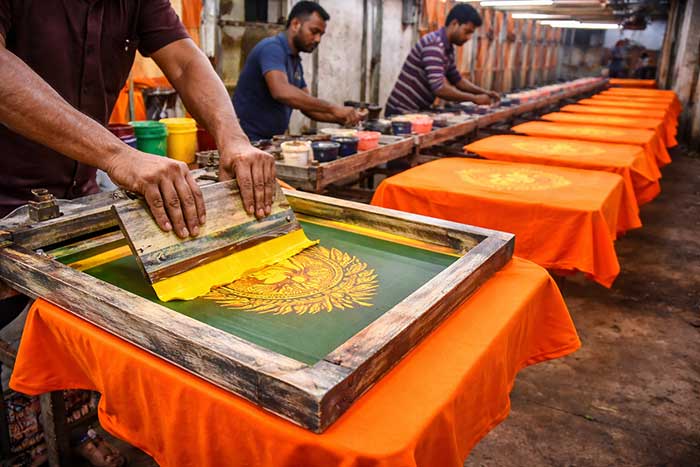
Screen printing, also known as silk screen printing, is one of the oldest and most trusted methods in T-shirt printing.
How It Works
A stencil (screen) is created for each color in the design. Ink is then pushed through the screen onto the fabric layer by layer.
Best For
- Bulk orders (50–5000+ pieces)
- Corporate uniforms
- Promotional campaigns
- Simple and bold designs
Advantages
- Exceptional durability – prints can last for years
- Vibrant colors – especially on dark fabrics
- Cost-effective in bulk
- Works on cotton, polyester, blends
Disadvantages
- High setup cost (screens required per color)
- Not suitable for small orders
- Limited flexibility for complex designs
Real Business Insight
For companies ordering corporate T-shirts, event merchandise, or promotional apparel, screen printing is still the most preferred method.
If your target audience includes bulk corporate clients, this should be your primary offering.
2. Direct-to-Garment (DTG) Printing – Digital Precision
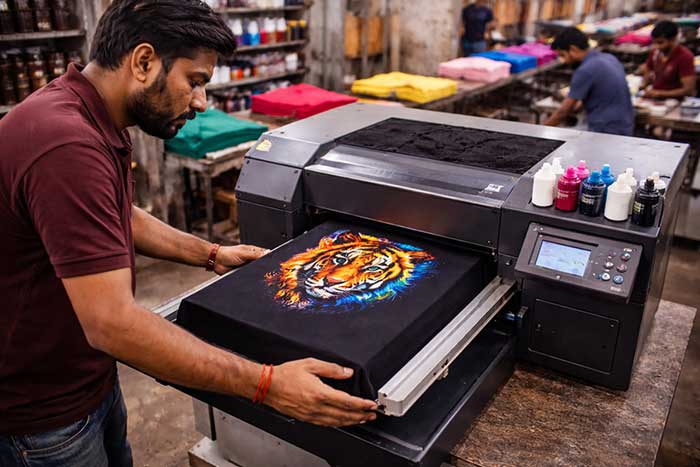
DTG printing is like using an inkjet printer — but instead of paper, it prints directly onto fabric.
How It Works
A digital file is sent to the printer, which sprays water-based ink directly onto the T-shirt.
Best For
- Small quantity orders
- Customized prints
- Detailed or photographic designs
Advantages
- High-resolution prints
- Unlimited color possibilities
- No setup cost
- Soft feel (no heavy layers)
Disadvantages
- Works best on cotton
- Slower for large orders
- Slightly lower durability compared to screen printing
Where It Fits
DTG is perfect for:
- Print-on-demand businesses
- Personalized gifts
- Testing new designs
For Annaya Creations, DTG can be a value-added service for small clients or samples.
3. Direct-to-Film (DTF) Printing – The Modern Game Changer
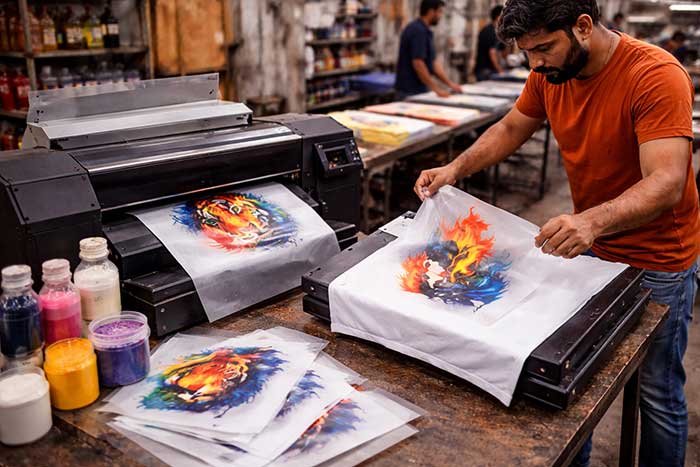
DTF printing is currently one of the fastest-growing technologies in the T-shirt industry — especially in India.
How It Works
- Design is printed on a special film
- Adhesive powder is applied
- The design is heat-pressed onto the fabric
Best For
- All fabric types
- Small to medium orders
- Complex, colorful designs
Advantages
- Works on cotton, polyester, blends
- Bright and sharp prints
- No fabric limitation
- Strong durability
Disadvantages
- Slightly rubbery feel
- Multi-step process
- Higher cost per piece than screen printing (in bulk)
Why It’s Important
DTF has become popular because it solves many limitations of DTG and screen printing.
If someone is starting a low-investment T-shirt business, DTF is often the best entry point.
4. Sublimation Printing – Perfect for Polyester
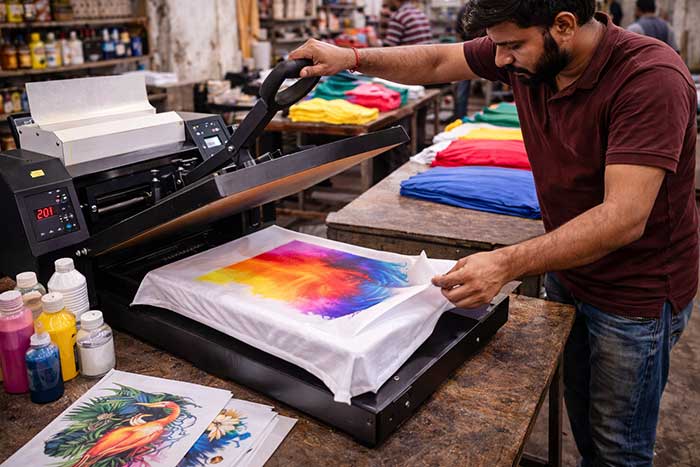
Sublimation is a unique printing method where ink becomes part of the fabric instead of sitting on top.
How It Works
Heat converts ink into gas, which bonds with polyester fibers.
Best For
- Polyester T-shirts
- Sportswear
- All-over designs
Advantages
- No cracking, peeling, or fading
- Extremely soft feel
- Full-color, edge-to-edge printing
- Long-lasting results
Disadvantages
- Only works on light-colored polyester
- Not suitable for cotton
- Limited for fashion wear
Industry Example
Most:
- Cricket jerseys
- Gym wear
- Sports uniforms
are made using sublimation.
5. Heat Transfer Vinyl (HTV) – Simple and Effective
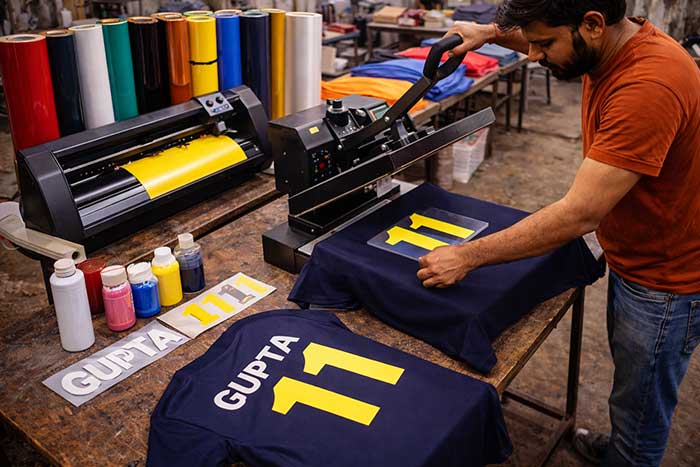
HTV is a basic method where designs are cut from vinyl sheets and heat-pressed onto T-shirts.
Best For
- Names and numbers
- Logos
- Small custom jobs
Advantages
- Easy to start
- Low investment
- Good durability
Disadvantages
- Not suitable for detailed designs
- Feels heavier on fabric
- Time-consuming for multi-color prints
6. Heat Transfer Printing (Paper & Plastisol Transfers)
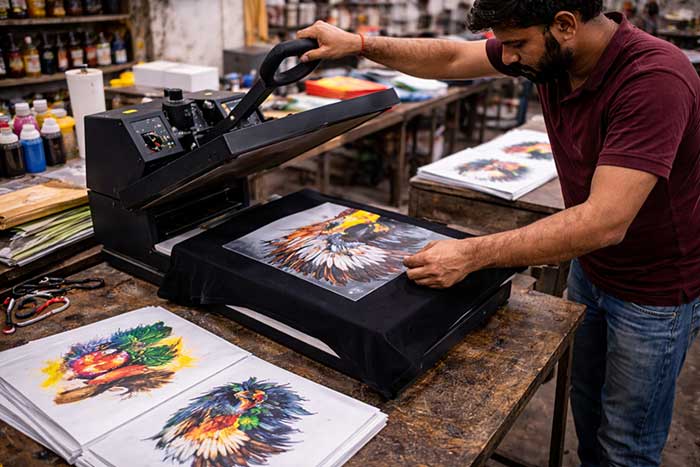
This method involves printing designs onto transfer sheets and applying them to fabric using heat.
Best For
- Medium quantity production
- Pre-prepared designs
Advantages
- Good color output
- Faster production after setup
- Flexible for scaling
Disadvantages
- Slightly thick print feel
- Requires heat press each time
- Not as premium as other methods
7. Embroidery – Premium Alternative to Printing
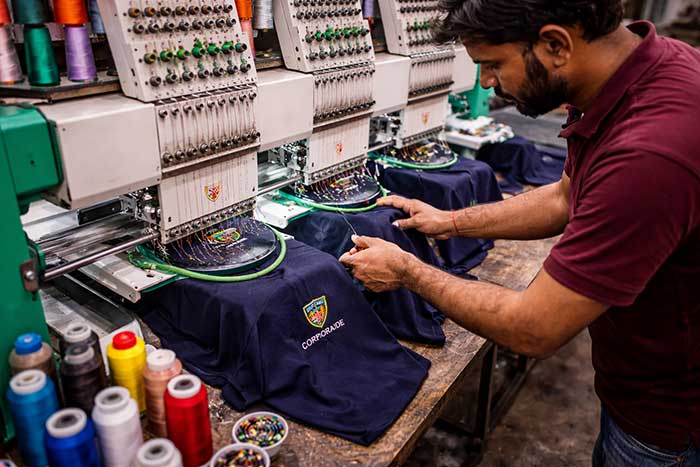
While not technically printing, embroidery is widely used in apparel branding.
Best For
- Polo T-shirts
- Corporate uniforms
- Premium branding
Advantages
- Elegant and professional look
- Extremely durable
- High perceived value
Disadvantages
- Expensive
- Not suitable for detailed artwork
- Limited design flexibility
How to Choose the Right T-Shirt Printing Method
Choosing the right method depends on four key factors:
1. Order Quantity
- Small orders → DTG / DTF
- Large orders → Screen printing
2. Fabric Type
- Cotton → DTG / Screen
- Polyester → Sublimation
- Mixed fabrics → DTF
3. Design Complexity
- Simple designs → Screen printing
- Complex designs → DTG / DTF
4. Budget
- Low budget → HTV / DTF
- High-volume budget → Screen printing
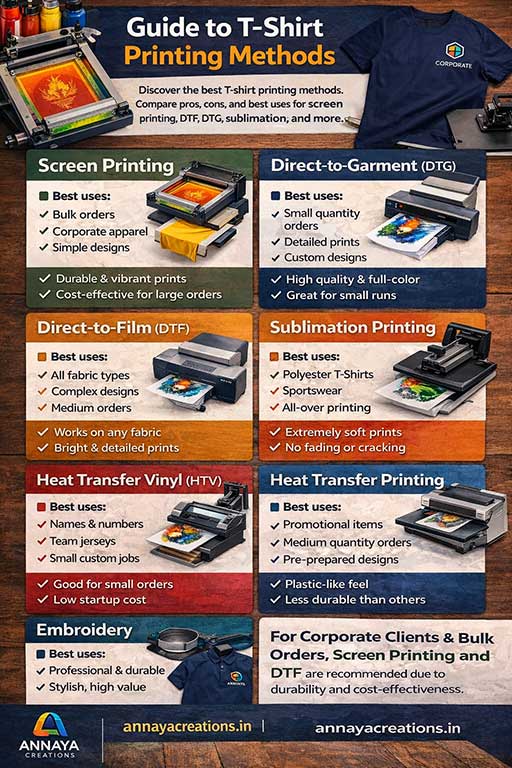
Cost Comparison (General Idea)
| Method | Setup Cost | Per Piece Cost | Best For |
|---|---|---|---|
| Screen Printing | High | Low | Bulk |
| DTG | Low | High | Small qty |
| DTF | Medium | Medium | Flexible |
| Sublimation | Medium | Medium | Polyester |
| HTV | Low | Medium | Custom |
Which Printing Method Lasts the Longest?
If durability is your main concern:
- Screen Printing
- Sublimation
- DTF
- HTV
- DTG
Best Printing Method for Business (India Perspective)
If you’re starting a printing business or scaling services like Annaya Creations:
Recommended Strategy
- Use Screen Printing for bulk clients
- Use DTF for flexibility
- Offer DTG for samples or custom orders
- Use Sublimation for sportswear clients
This hybrid approach ensures you never lose a client due to limitations.
Future of T-Shirt Printing (2026 and Beyond)
The industry is shifting towards:
- On-demand printing
- Eco-friendly inks
- Faster turnaround
- Customization at scale
DTF and DTG are expected to grow rapidly, while screen printing will continue dominating bulk production.
T-shirt printing is not just about putting ink on fabric — it’s about choosing the right technique for the right purpose.
There’s no universal best method.
- For durability and scale → Screen printing
- For flexibility → DTF
- For detail → DTG
- For sportswear → Sublimation
If you understand these differences, you can make better business decisions, deliver better quality, and build stronger client trust.
Frequently Asked Questions About T-Shirt Printing Methods
Which is the best T-shirt printing method?
The best T-shirt printing method depends on your requirement. For bulk corporate orders, screen printing is usually the best choice. For small custom orders and multi-color designs, DTF printing and DTG printing are excellent options.
Which printing method lasts the longest?
Screen printing and sublimation printing are considered the most durable methods. Both offer long-lasting prints that resist fading, peeling, and cracking even after multiple washes.
What is the difference between DTF and sublimation printing?
DTF printing works on cotton, polyester, and blended fabrics, while sublimation printing works best only on light-colored polyester fabrics. Sublimation ink becomes part of the fabric, whereas DTF sits as a transfer layer on top.
Which printing method is best for corporate T-shirts?
For corporate T-shirts and bulk promotional apparel, screen printing and embroidery are highly recommended due to their professional finish, durability, and cost-effectiveness in large quantities.
Can DTF printing be used on cotton T-shirts?
Yes, DTF printing works very well on cotton T-shirts and is one of the most flexible printing methods available today.
Which T-shirt printing method is most cost-effective?
For bulk orders, screen printing is the most cost-effective method. For small quantity custom orders, DTF and heat transfer printing can be more economical.







Leave a Reply